3 min read
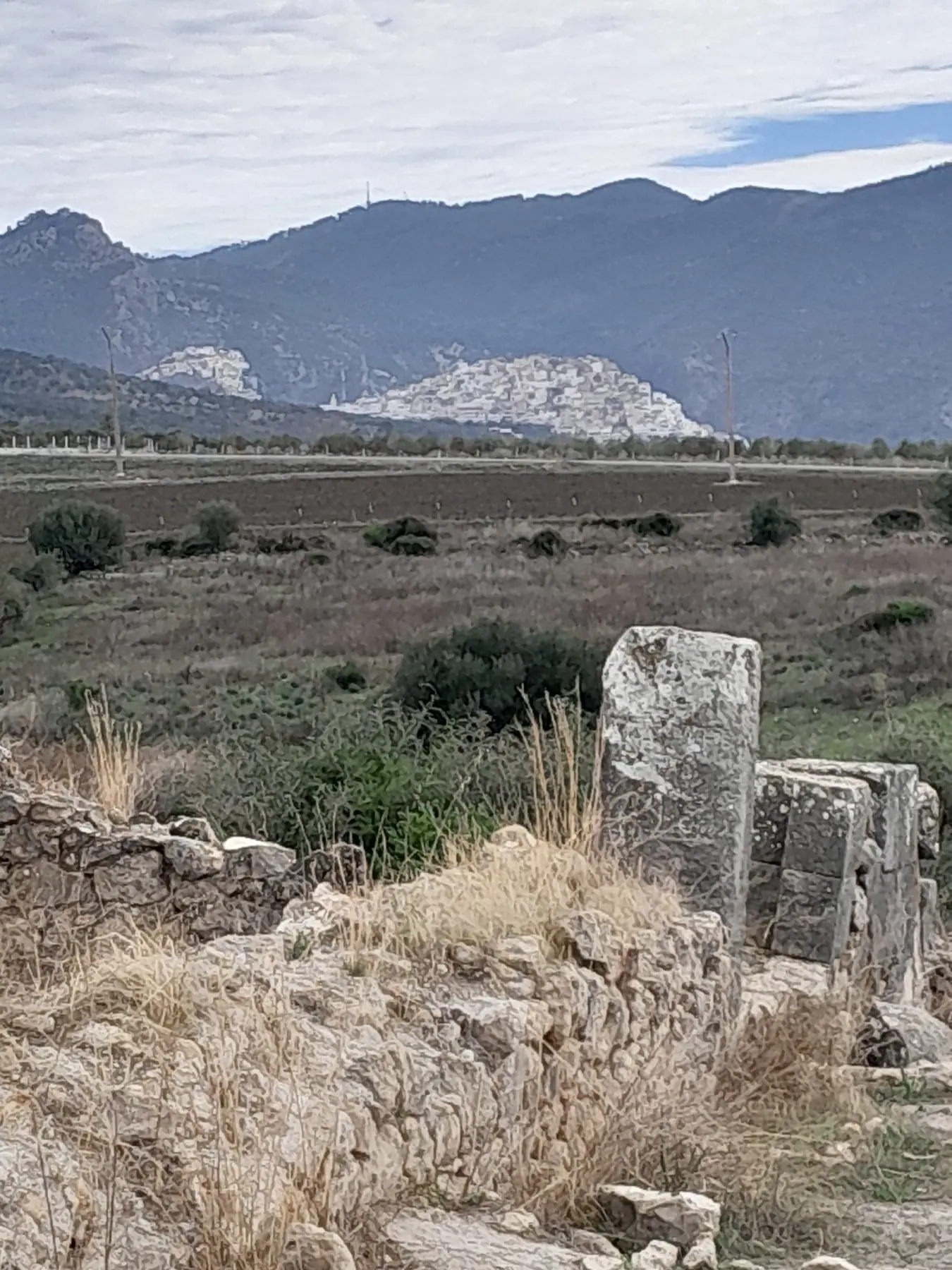
Moulay Abdessalam Ibn Mashish: the saint of Jbel Alam
Moulay Abdessalam Ibn Mashish, master of Imam al-Shadhili: his tomb on Jbel Alam, his salawat (the Ṣalāt al-Mashīshiyya) and how to visit with a guide.
Read the articleThe Shadhili path
الطريقة الشاذلية
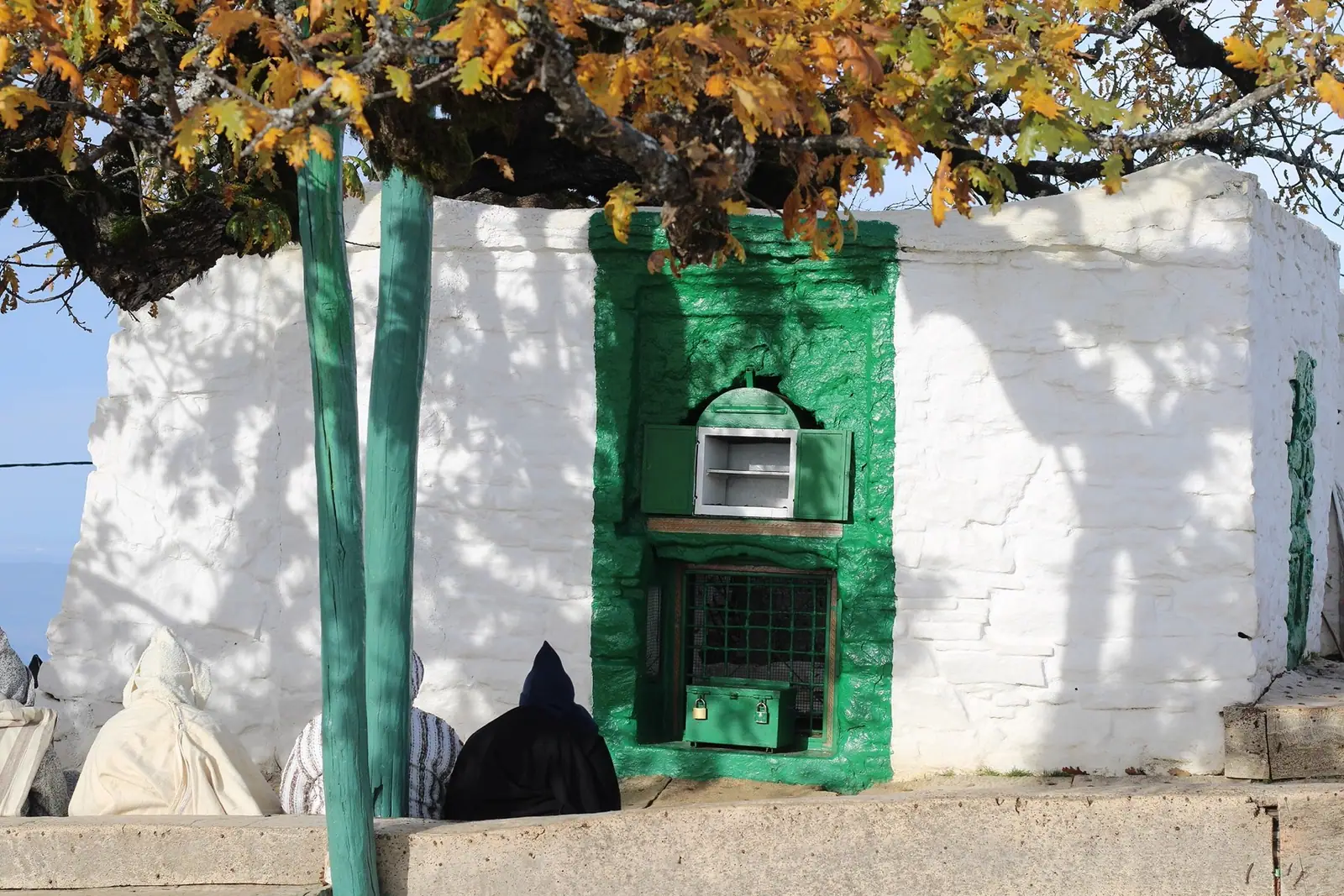
The Shadhili path takes its name from Abu al-Hasan al-Shadhili, who found his master, Moulay Abdessalam Ibn Mashish, at Jbel Alam. Its Moroccan branches shaped the devotional life of Marrakech, Fez, Tetouan and beyond.
An introduction
The Shadhiliyya is one of the great Sufi paths of Islam, and the one most deeply rooted in Morocco. It takes its name from Abu al-Hasan al-Shadhili, born around 1196 among the Ghumara of northern Morocco. He studied in Fez, then travelled east in search of a master. In Iraq he was told that the one he sought lived in his own country. He came home to Jbel Alam and became the disciple of Moulay Abdessalam Ibn Mashish.
From there he carried the teaching to Tunisia, where the village of Shadhila gave him his name, and on to Egypt. He died in 1258 at Humaithara, on the road to the pilgrimage. His successors in Alexandria wrote the teaching down, above all Ibn ʿAṭāʾ Allāh, whose Ḥikam are still read wherever Sufism is taught.
The path asks for no special dress and no withdrawal from the world. Its followers keep their work and their families, hold to the Sharia and the Sunna, and fill ordinary days with remembrance of God, gratitude, and a litany recited morning and evening. Its best-known prayers are the Ṣalāt al-Mashīshiyya of Ibn Mashish and the Ḥizb al-Baḥr, the Litany of the Sea, of al-Shadhili.
In Morocco the path was renewed in the fifteenth century by Imam Muhammad al-Jazuli, author of the Dalāʾil al-Khayrāt, and again around 1800 by Moulay al-Arbi al-Darqawi. Many of the country’s orders trace their chain through it. Our retreats follow that chain on the ground, from the mountain of Ibn Mashish to the tomb of al-Jazuli and the Nasiri zawiya of Tamegroute.
How we tell this story
Sufi orders describe their own chains of transmission (silsila) and the rank of their masters. We present the relationships documented in our sources, and attribute beliefs particular to an order to that order.
Ibn Mashish taught at Jbel Alam in the early thirteenth century. His most celebrated student, Abu al-Hasan al-Shadhili, carried the teaching east to Tunis and Alexandria; the path that bears his name spread across the Muslim world.
In fifteenth-century Morocco, Imam al-Jazuli gave the path a new, widely followed form. His Dalāʾil al-Khayrāt, a book of blessings on the Prophet ﷺ, is still recited today. In Marrakech, his heirs al-Tabbaʿ and al-Ghazwani are, with him, three of the city’s Seven Saints.
In the late eighteenth century, Moulay al-Arbi al-Darqawi renewed the path in the north. His disciple Muhammad al-Harraq founded the Harraqiyya zawiya in Tetouan, which the Ministry of Habous records within the Darqawi Shadhili lineage.
Abu al-Hasan al-Shadhili
أبو الحسن الشاذلي
d. 1258 · Buried at Humaithara, Egypt
The teaching is carried across two centuries, in North Africa and Egypt
Later Moroccan transmission
Moulay al-Arbi al-Darqawi
مولاي العربي الدرقاوي
d. 1823 · Bou Berih, Beni Zeroual
Other Moroccan branches
The Nasiriyya
Tamegroute, Drâa valley
A Shadhili branch renowned under Muhammad ibn Nasir al-Darʿi (d. 1674), whose zawiya kept a celebrated manuscript library.
The Nasiri Oasis RetreatThe Cherkaouiya
Boujaâd
The zawiya of Sidi Mhammed al-Sharqi (d. c. 1601), generally placed in the Jazuli–Shadhili milieu.
The Central Morocco Spiritual JourneyQuestions
The Shadhiliyya is a Sufi path of Islam named after Abu al-Hasan al-Shadhili (c. 1196–1258), who was born in northern Morocco and became the disciple of Moulay Abdessalam Ibn Mashish on Jbel Alam. It is known for keeping remembrance of God inside ordinary life: no special dress and no withdrawal from work and family.
Abu al-Hasan al-Shadhili, who took the path from his master Moulay Abdessalam Ibn Mashish and taught in Tunisia and Egypt. His successors in Alexandria, above all Ibn ʿAṭāʾ Allāh, wrote the teaching down.
Dhikr, a daily litany (wird) recited morning and evening, and blessings on the Prophet ﷺ. Its best-known prayers are the Ṣalāt al-Mashīshiyya of Ibn Mashish and the Ḥizb al-Baḥr of al-Shadhili.
Yes. It was renewed in Morocco by Imam al-Jazuli in the fifteenth century and by Moulay al-Arbi al-Darqawi around 1800, and many Moroccan orders, such as the Jazuliyya, the Nasiriyya, the Wazzaniyya and the Darqawiyya, trace their chain through it.
Journal
3 min read
Moulay Abdessalam Ibn Mashish, master of Imam al-Shadhili: his tomb on Jbel Alam, his salawat (the Ṣalāt al-Mashīshiyya) and how to visit with a guide.
Read the article3 min read
Dhikr means the remembrance of God. What it is, the common words of dhikr, how it is practised alone and in a zawiya gathering, and how to attend one.
Read the article3 min read
Ziyara means a visit: in Morocco, the visit to the tombs of saints and zawiyas. Its meaning, its adab, the main places of ziyara and how scholars view it.
Read the articleFollow the path
The Shadhili Path
Mountains, remembrance and reflection.
5 days · 4 nights · from Tangier airport (TNG)
See the retreatAtlantic Serenity
The Moulay Bousselham retreat.
3 days · 2 nights · from Rabat (RBA), Tangier (TNG) or Casablanca (CMN) airport
See the retreatThe Spiritual Heart of Morocco
Fez, Meknes and the Idrisid heritage.
6 days · 5 nights · from Fès–Saïss airport (FEZ)
See the retreatThe Central Morocco Spiritual Journey
Moulay Bouazza and Boujad, from Casablanca.
5 days · 4 nights · from Casablanca airport (CMN)
See the retreatThe Seven Saints Retreat
Marrakech, ṣalawāt and sacred heritage.
6 days · 5 nights · from Marrakech airport (RAK)
See the retreatThe Nasiri Oasis Retreat
Tamegroute and the Drâa valley.
6 days · 5 nights · from Marrakech airport (RAK)
See the retreat