Journal · 5 min read
Ibn ʿAtaʾillah and the Hikam: the aphorisms of the Shadhili path
By Nūr Morocco ·
In short
Ibn ʿAtaʾillah al-Iskandari (c. 1259–1309) was an Egyptian jurist and the third master of the Shadhili path, after al-Shadhili and Abu al-ʿAbbas al-Mursi. His Ḥikam, a book of some 260 short aphorisms with a few letters and intimate prayers, is one of the most widely studied texts of Sufism. It teaches reliance on God rather than on one’s own deeds, letting go of anxious planning, and steady remembrance. Moroccan masters wrote its best-known commentaries, among them Ibn ʿAbbad of Ronda in Fes, Ahmad Zarruq and Ahmad ibn ʿAjiba.
Who he was
Taj al-Din Ahmad ibn Muhammad ibn ʿAtaʾillah was born in Alexandria around 1259, into a family of Maliki scholars. His grandfather was a respected jurist, and the young Ibn ʿAtaʾillah trained in law, hadith, grammar and theology. He was, by his own account, suspicious of the Sufis at first, and argued against the circle of Abu al-ʿAbbas al-Mursi, the successor of Imam al-Shadhili in Alexandria.
He went to hear al-Mursi in order to test him, and came away changed. He became his disciple and stayed with him for some twelve years, until al-Mursi’s death in 1287. Ibn ʿAtaʾillah later moved to Cairo, where he taught law and Sufism at al-Azhar and at the Mansuriyya madrasa, and preached to large audiences. He died in Cairo in 1309 and is buried in the Qarafa cemetery below the Muqattam hills, where his tomb is visited today.
The man who wrote the path down
Al-Shadhili and al-Mursi wrote almost nothing; Ibn ʿAtaʾillah wrote a great deal, and most of what we know of the early Shadhili path comes through him. His Laṭāʾif al-minan records the lives and sayings of his two predecessors. His Miftāḥ al-falāḥ is a manual of dhikr, which we draw on in our article on Shadhili dhikr. His al-Tanwīr fī isqāṭ al-tadbīr explains how to let go of the anxious management of one’s own affairs. You can read about the founder of the path in our article on Abu al-Hasan al-Shadhili.
What the Hikam is
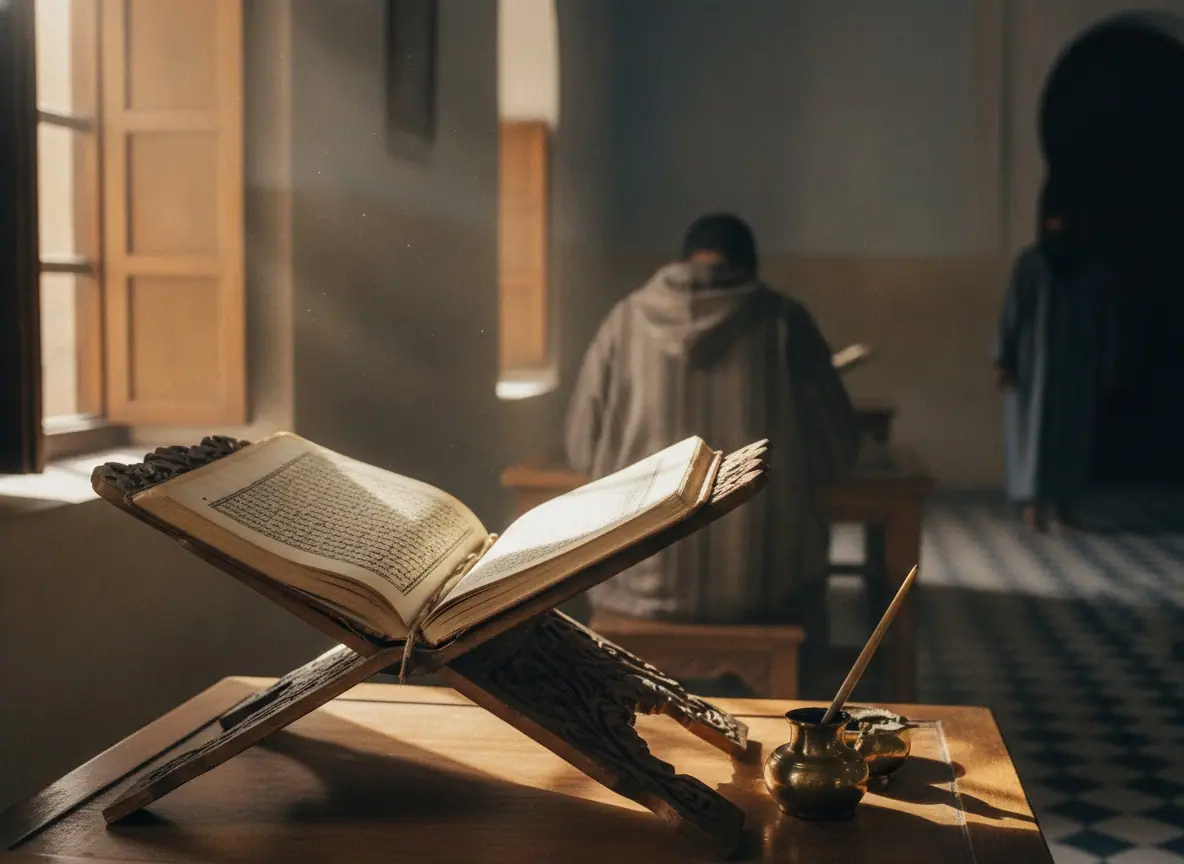
The Ḥikam (“wise sayings”) is his best-known work: some 260 aphorisms, most only a sentence or two long, followed by a few short letters to companions and a series of intimate prayers (munājāt). Its Arabic is compact and carefully balanced, which is why it is often memorised. Tradition holds that al-Mursi’s teaching is distilled in it, and that Ibn ʿAtaʾillah wrote it while his master was still alive.
The sayings are not arranged as a treatise. Each can be read alone, and readers usually take one or two at a time, slowly, often with a commentary. Together they form a portrait of the inner life on the Shadhili path: sober, grateful, free of self-display and turned towards God in ordinary circumstances.
Five sayings, in our own translation
A few of the aphorisms are quoted again and again. Here are five of them, translated freely to keep their sense.
- One sign of relying on your deeds is that your hope falls when you slip. (The first saying of the book: hope rests on God’s generosity, not on one’s own record.)
- Bury your existence in the earth of obscurity; what grows from a seed that was not buried does not ripen. (Against seeking a name before the heart is ready.)
- Let yourself rest from managing your affairs: what Another has taken care of for you, do not take on yourself. (The theme of letting go of anxious planning.)
- Do not give up remembrance because your heart is not present in it. Forgetting Him altogether is worse than being absent while you remember Him. (On keeping dhikr even when it feels dry.)
- A sin that leaves you humble and in need is better than an act of obedience that leaves you proud. (On the danger of spiritual self-satisfaction, never as permission to sin.)
Its Moroccan commentators
The Ḥikam travelled west quickly, and Morocco produced several of its most important commentaries.
- Ibn ʿAbbad of Ronda (d. 1390), born in al-Andalus, became preacher and imam at the Qarawiyyin Mosque in Fes. His commentary, al-Tanbīh, was for centuries the most widely read explanation of the Ḥikam, and his letters of spiritual guidance are still read. He is buried in Fes.
- Ahmad Zarruq of Fes (d. 1493), one of the great jurists and teachers of the path, is said to have written more than a dozen commentaries on the Ḥikam, each for a different kind of reader.
- Ahmad ibn ʿAjiba of Tetouan (d. 1809), a master of the Darqawi renewal, wrote Īqāẓ al-himam fī sharḥ al-Ḥikam, a commentary still taught in Moroccan zawiyas and widely available in translation.
How it is read today
In Morocco the Ḥikam is still taught in mosques and zawiyas, usually by reading one aphorism with a commentary and discussing it. Many readers start with an English translation alongside a short commentary. A good habit is to take a single saying each morning and return to it during the day, which is close to the way the book was meant to be used.
Where you meet it on our retreats
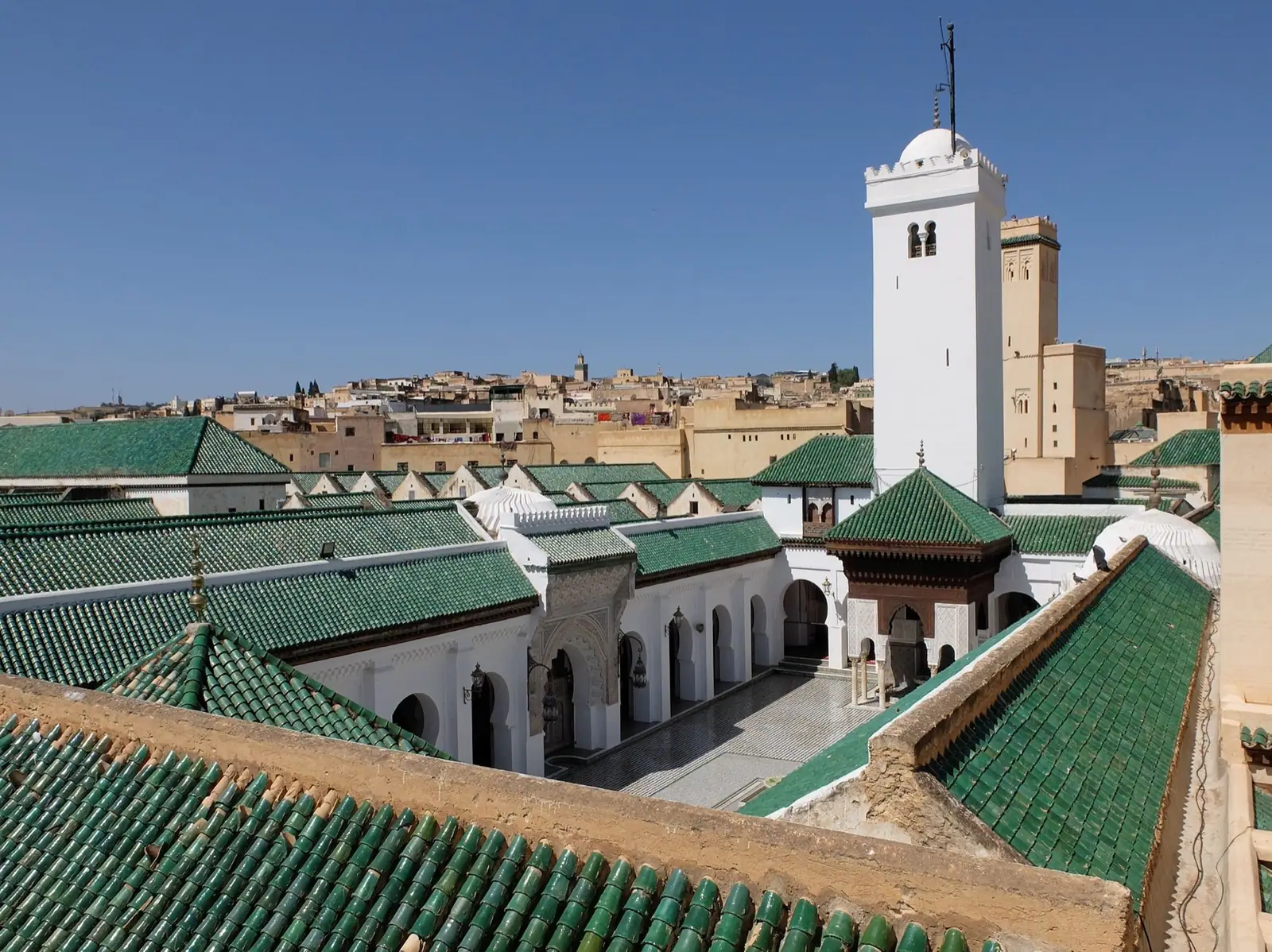
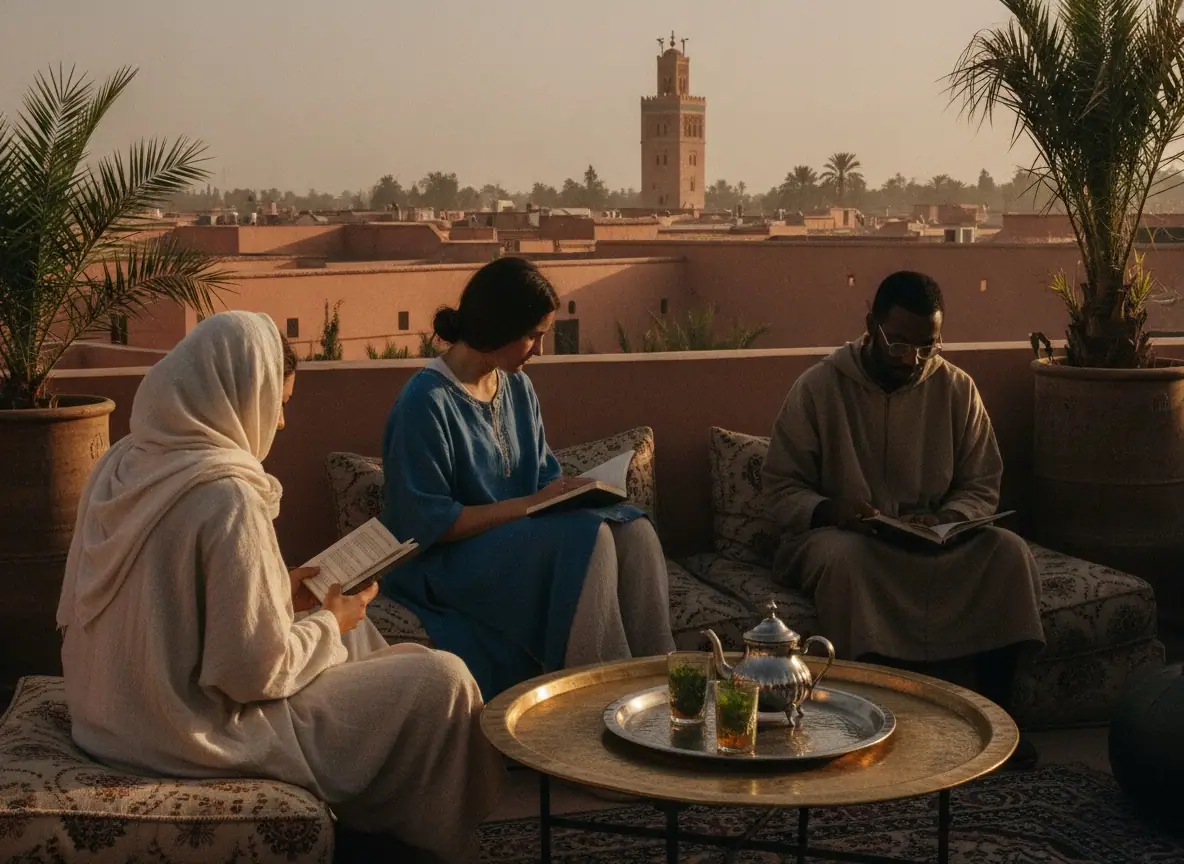
The afternoons of our retreats are kept for rest, reading and silence. The facilitator sets a short reading for each day, often one of the aphorisms of the Ḥikam with a few lines of commentary, and returns to it in the evening session. In Fes, the Fes Heritage Retreat passes the Qarawiyyin, where Ibn ʿAbbad taught the Ḥikam, and visits places linked to the masters of the Shadhili chain.
Guests on both tracks are welcome to the readings; they ask nothing beyond attention. Dates are shared by the three tiers of each city and confirmed once 10 guests have joined; see the current ones on our group dates page.
Questions
Who was Ibn ʿAtaʾillah al-Iskandari?
An Egyptian Maliki jurist and Sufi master (c. 1259–1309), disciple of Abu al-ʿAbbas al-Mursi and third master of the Shadhili path, best known for the Ḥikam.
What is the Hikam about?
Short aphorisms on the inner life: relying on God rather than on one’s own deeds, letting go of anxious planning, sincerity, gratitude and steady remembrance.
How many aphorisms are in the Hikam?
Around 260, followed by a few letters and intimate prayers. Editions number them slightly differently.
Which commentary on the Hikam should I read?
Ibn ʿAbbad of Ronda’s al-Tanbīh and Ibn ʿAjiba’s Īqāẓ al-himam are the classic Moroccan commentaries, and Ibn ʿAjiba’s is widely available in English.
Where is Ibn ʿAtaʾillah buried?
In the Qarafa cemetery in Cairo, below the Muqattam hills.
Is there an English translation of the Hikam?
Yes, several. Victor Danner’s, published as Sufi Aphorisms and later as The Book of Wisdom, is a standard one.
Sources
- Ibn ʿAtaʾillah, Kitāb al-Ḥikam, tr. Victor Danner as Sufi Aphorisms (Brill, 1973) and The Book of Wisdom (Paulist Press, 1978)
- John Renard (tr.), Ibn ʿAbbad of Ronda: Letters on the Sufi Path (Paulist Press, 1986)
- Encyclopaedia of Islam, Second Edition: “Ibn ʿAṭāʾ Allāh” and “Shādhiliyya”