Journal · 6 min read
Spiritual retreats in Morocco from the UK: a practical guide
By Nūr Morocco ·
In short
Morocco is three to four hours from London by air, and British citizens can visit for up to 90 days without a visa. Our retreats last three to six days, so each fits into a week of leave: fly into Tangier for the Shadhili Path, Fez for Fez and Meknes, Marrakech for the Seven Saints or the Drâa valley, Rabat for the Atlantic coast, or Casablanca for Moulay Bouazza and Boujad.
Why Morocco for a spiritual retreat
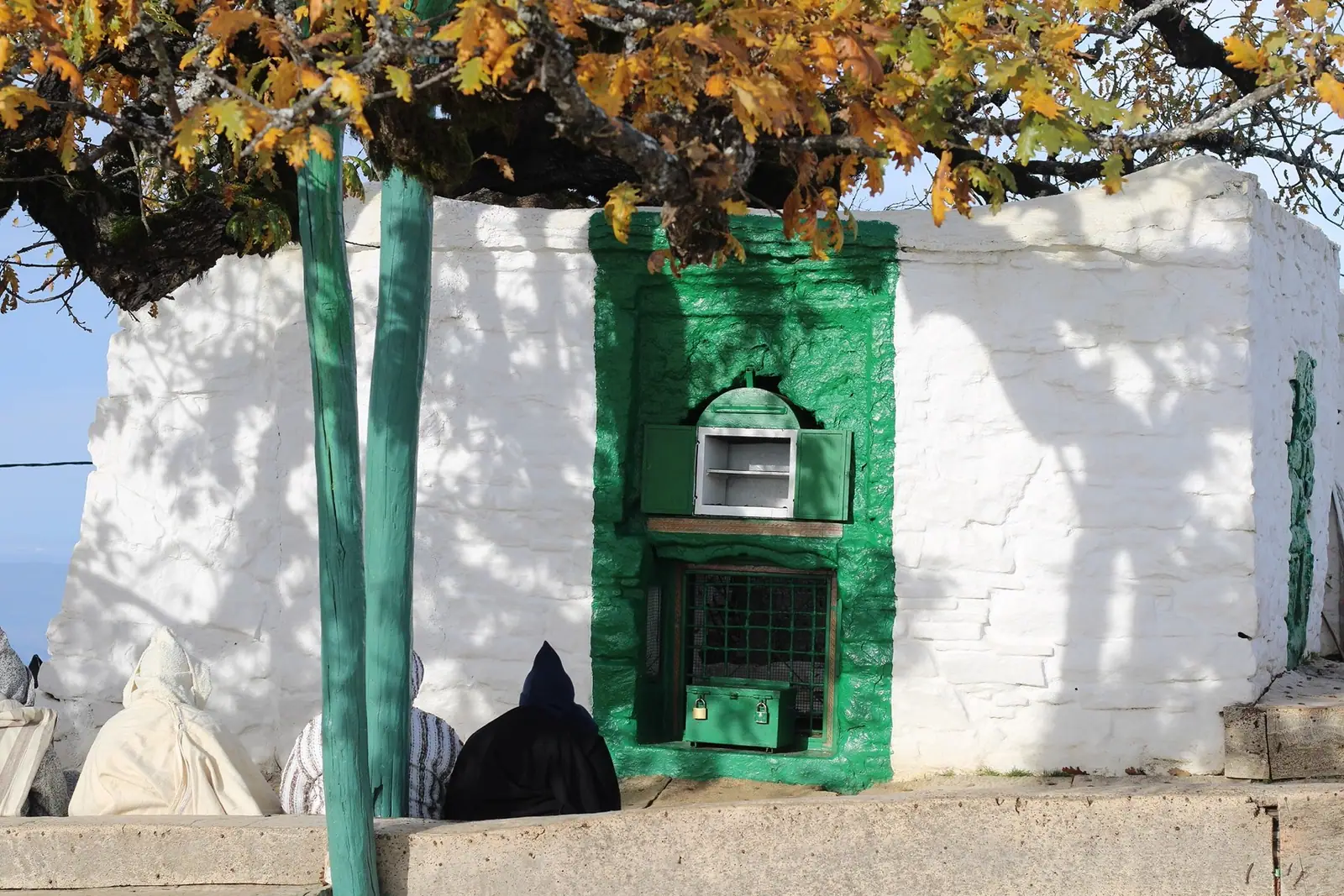
Few countries keep their Sufi heritage as visibly as Morocco. Zawiyas still hold weekly gatherings of dhikr, the tombs of saints are visited every day, and the Shadhili path, one of the great Sufi paths of Islam, began on a mountain in the north of the country, where Abu al-Hasan al-Shadhili found his master, Moulay Abdessalam Ibn Mashish.
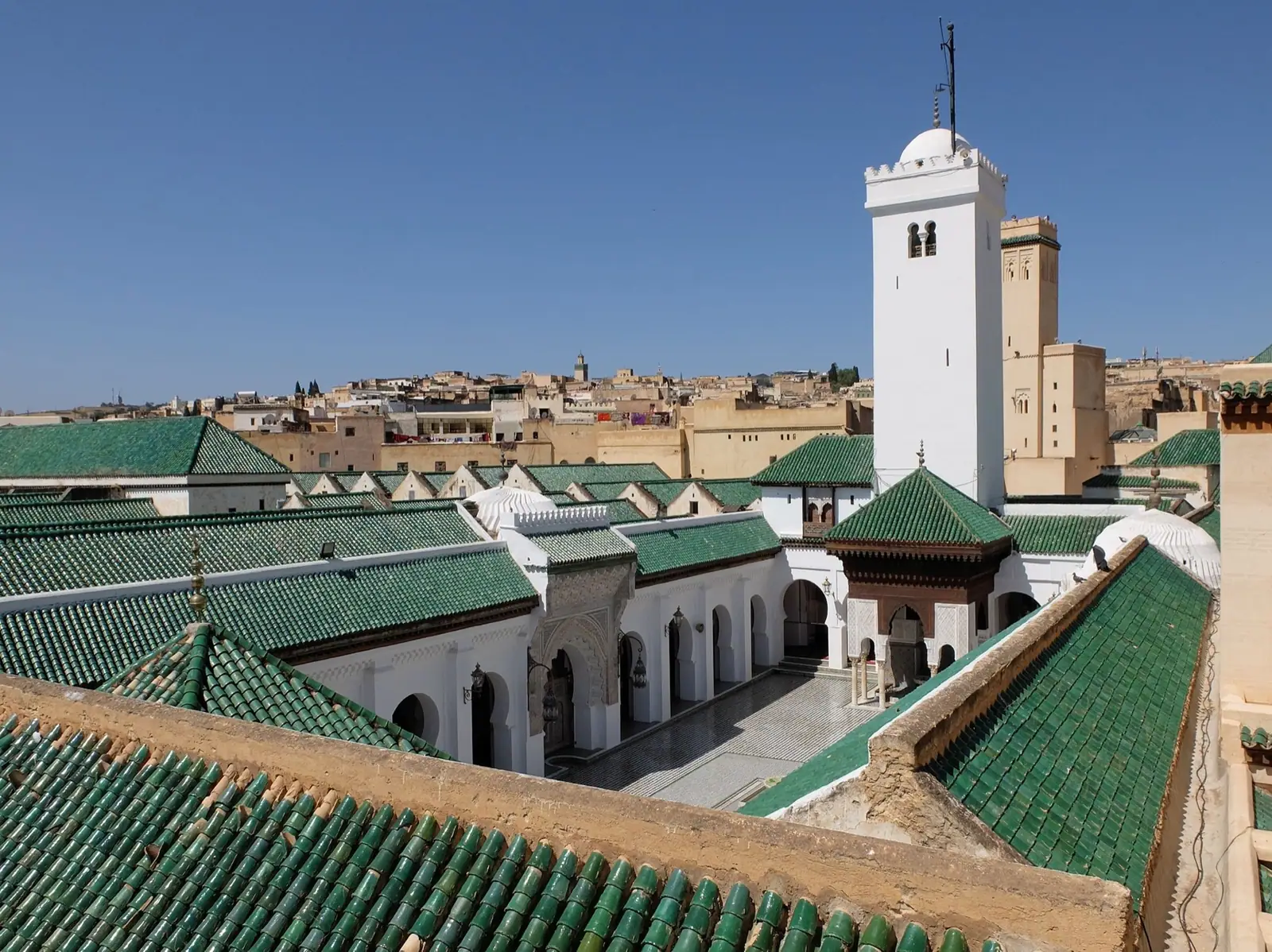
A retreat here is not a resort with a meditation room. It is a journey through living places of prayer: the darih of Moulay Idriss II in Fez, the Seven Saints of Marrakech, the mountain of Jbel Alam. Days are set around the prayer times, with time kept for reading and silence.
Which airport for which retreat
Each of our six retreats starts and ends at the airport that suits it, and every retreat includes the airport pickup and the transfer back.
- The Shadhili Path (Jbel Alam, Tetouan, Ibn ʿAjiba): fly into Tangier Ibn Battouta (TNG). Tetouan is 74 km away, about 1 h 20 by road.
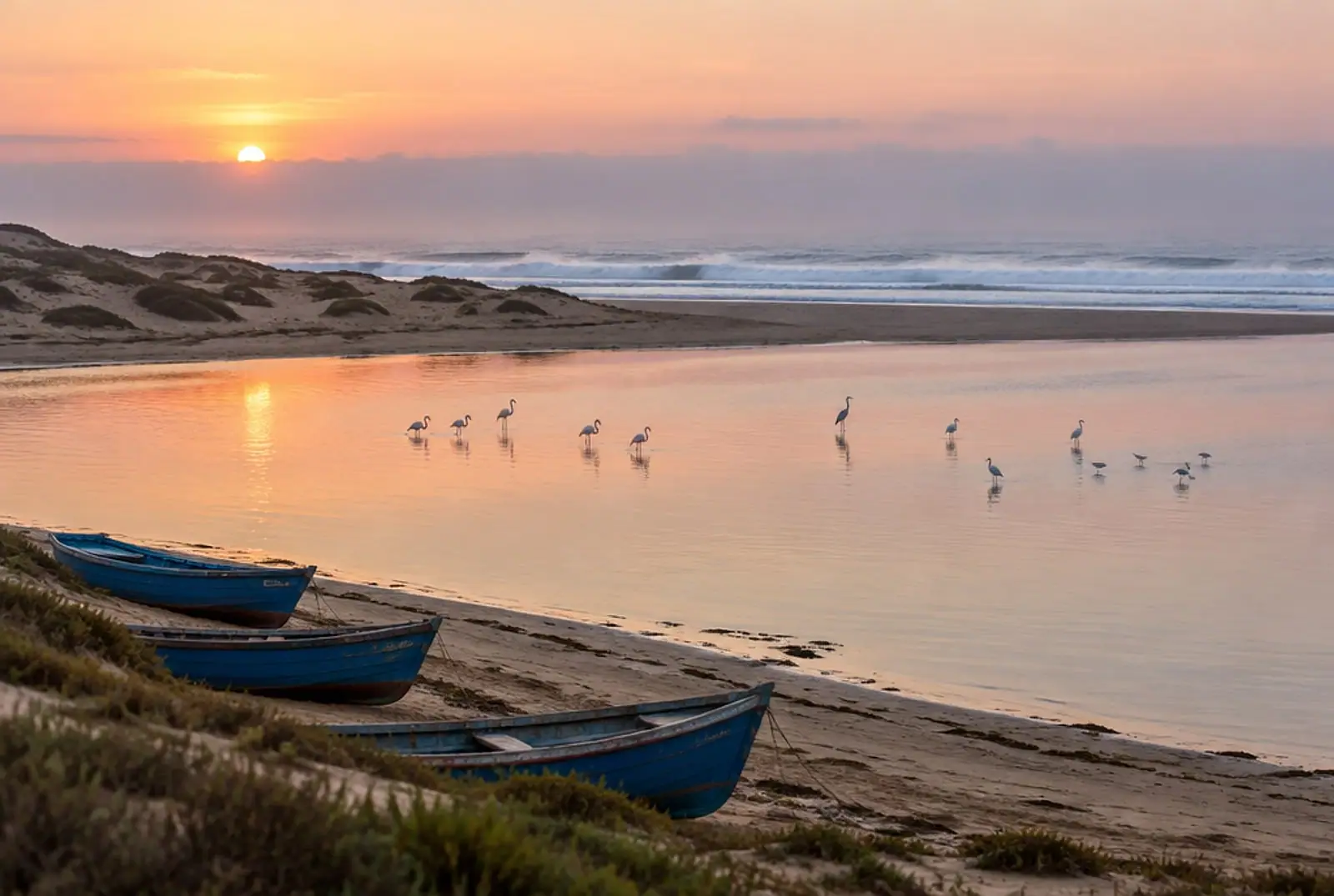
- Atlantic Serenity (Moulay Bousselham): fly into Rabat–Salé (RBA), 127 km away, about 1 h 30; Tangier and Casablanca also work.
- The Spiritual Heart of Morocco (Fez and Meknes): fly into Fès–Saïss (FEZ), 17 km from the old medina, about 25 minutes.
- The Central Morocco Spiritual Journey (Moulay Bouazza and Boujad): fly into Casablanca Mohammed V (CMN).
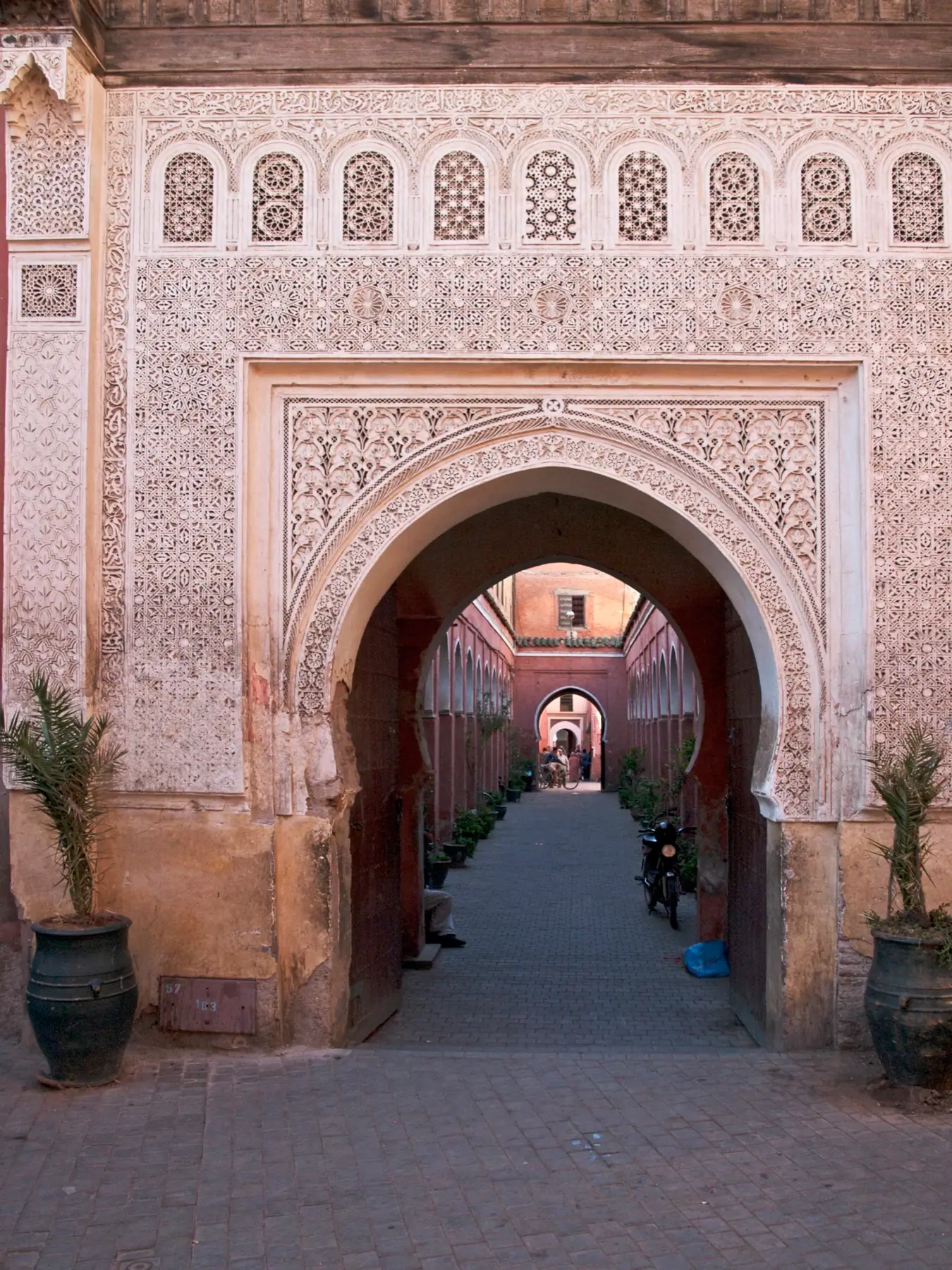
- The Seven Saints Retreat and the Nasiri Oasis Retreat: fly into Marrakech Menara (RAK), 7 km from the medina, about 15 minutes.
- Casablanca Mohammed V (CMN) has the most international connections. From there, Marrakech is 228 km by road (about 2 h 40) and Fez 321 km (about 3 h 40).
Flights from the UK
Direct flights from London take roughly three hours to Tangier, Fez and Rabat and three and a half to four hours to Marrakech; from Manchester, Birmingham, Bristol or Scotland allow a little longer. Marrakech has the most direct flights from UK airports. Fez, Tangier and Rabat have fewer, and some routes run only in certain seasons, so compare a direct flight with a connection through Casablanca or a European hub. Schedules change often: check the airlines’ current timetables before you choose your dates, and tell us your flights so we can meet you on arrival.
Entry requirements for British travellers
British citizens do not need a visa or an e-visa to visit Morocco for up to 90 days. Your passport must be valid for the whole of your stay.
If you live in the UK on another passport, the rule depends on your nationality, not your residence: some nationalities need a visa or can apply for an e-visa. Check Morocco’s official e-visa portal before you book flights.
Entry rules can change. Before you book flights, read the UK government’s foreign travel advice for Morocco on GOV.UK, which also covers health, local laws and safety. We ask every guest to travel with insurance that covers medical care and cancellation.
Money, time and practicalities
- Currency: the Moroccan dirham (MAD). It is a closed currency, so most visitors withdraw dirhams from cash machines on arrival. Cards are accepted in many hotels and larger shops; keep cash for small purchases and for charity at the shrines.
- Time: Morocco runs on GMT+1 for most of the year, so it is the same time as the UK in summer and one hour ahead in winter. During Ramadan it moves back to GMT.
- Plugs: 220 V, with two-pin European sockets (types C and E). Bring an adaptor for UK plugs.
- Language: Moroccan Arabic (Darija) and Amazigh are spoken everywhere and French is common. English is spoken in most riads and by our guides.
When to go
Spring (March to May) and autumn (September to November) are the most comfortable months: warm days and cool evenings. Summer is very hot in Fez and Marrakech, though early mornings and evenings stay pleasant for ziyara; the North is milder. Winter brings cold nights, rain in the Rif and, in some years, difficult mountain roads to Jbel Alam, which is why we check access for every date.
Ramadan changes the rhythm of the day: shorter visiting hours, the breaking of the fast at sunset and long nights of prayer. For guests on the devotional track it can be a very special time to come. Tell us if you would like to travel during Ramadan.
What a retreat day looks like
Each day turns around the five prayers. A typical day starts with Fajr and breakfast on the riad roof, continues with a morning of ziyara, keeps the afternoon for rest, reading and silence, and ends with Maghrib and an evening of remembrance, ṣalawāt or Moroccan madīḥ. Gatherings with a zawiya are confirmed for each date.
You choose between two tracks. The devotional track is for Muslims: the five prayers in congregation, full participation in the dhikr, and the interiors open to Muslim visitors. The open track welcomes every seeker: the same route and places, with guided explanation, quiet attendance at the dhikr where visitors are welcomed, and time to reflect.
What to wear at sacred places
Dress modestly: covered shoulders and knees for everyone, and a headscarf for women inside sanctuaries. Shoes come off where indicated. Photography inside shrines is allowed only when a custodian permits it, and never of people at prayer.
Some mosque and shrine interiors in Morocco are reserved for Muslim visitors. Where that applies, open-track guests have a guided visit outside.
Cost and booking
Prices are calculated from the accommodation level, group size, transport and confirmed programme, and quoted on request. Every retreat is all-inclusive: airport pickup and transfers, accommodation, three meals a day, ground transport, a local guide and a qualified spiritual facilitator for the sessions agreed in your programme, and devotional evenings where arranged. Small groups have 8 to 14 guests; private and family retreats run on your own dates. Flights and insurance are not included.
To book, choose a retreat and a track and send your dates from the retreat page. You receive a reference at once, and we reply with your programme and price. Nothing is paid online.
Questions
Do I need a visa to visit Morocco from the UK?
No, not for a visit of up to 90 days on a British passport, which must be valid for your whole stay. Check the UK government’s Morocco travel advice on GOV.UK before you travel, as rules can change.
How long is the flight from London to Morocco?
About three hours to Tangier, Fez or Rabat, and three and a half to four hours to Marrakech. Flights from regional UK airports take a little longer.
Do I need an e-visa for Morocco from the UK?
Not on a British passport, for visits of up to 90 days. If you live in the UK on another passport, check Morocco’s official e-visa portal, as the rule depends on your nationality.
Can I join a Sufi retreat in Morocco if I am not Muslim?
Yes. Our open track is for every seeker, of any faith or none. It follows the same route as the devotional track, with guided exterior visits where a sanctuary is reserved for Muslims and quiet attendance at the dhikr where the zawiya welcomes visitors.
What is the best time of year for a retreat in Morocco?
Spring and autumn are the most comfortable. Summer is very hot inland, and in winter the mountain road to Jbel Alam can be difficult, so we check access for each date.
Which retreat should I choose for a first visit?
For the roots of the Shadhili path, the Shadhili Path retreat in the north. For learning and the Idrisid heritage, Fez and Meknes. For the Seven Saints and Imam al-Jazuli, Marrakech. For a short, gentle start, the three days of Atlantic Serenity by the sea. Retreats can be joined into a longer journey.