Journal · 5 min read
Imam al-Jazuli and the Dalāʾil al-Khayrāt: the saint of Marrakech
By Nūr Morocco ·
In short
Imam Muhammad ibn Sulayman al-Jazuli (d. 1465) was a Moroccan scholar from the Sus who renewed the Shadhili path in the fifteenth century and wrote the Dalāʾil al-Khayrāt, a book of blessings on the Prophet ﷺ that is still one of the most widely read prayer books in the Muslim world. His line, the Shadhili-Jazuli, became the main trunk of Moroccan Sufism. His tomb, moved to Marrakech in the sixteenth century, is the fourth station of the Seven Saints ziyara.
Who he was
Muhammad ibn Sulayman al-Jazuli was born in the early fifteenth century among the Jazula, a Berber people of the Sus in southern Morocco, from whom he takes his name. He studied in Fes, at the Saffarin madrasa beside the Qarawiyyin, where he learnt Maliki law and the religious sciences. Like many seekers, he left the city looking for a teacher of the inner path.
He found one on the Atlantic coast, near Azemmour: Muhammad Amghar al-Saghir, a master of the Shadhili path, who initiated him. According to his biographers, al-Jazuli then spent many years in retreat (some say fourteen) before he began to teach. He settled at Afughal, in the Haha country inland from Essaouira, where disciples gathered around him in great numbers. He died in 1465, at prayer according to his followers, and was buried there.
The Jazuli renewal of the Shadhili path
Two centuries after Abu al-Hasan al-Shadhili, the path he founded had spread across North Africa and Egypt, but in Morocco it was carried by small circles of scholars. Al-Jazuli opened it to farmers, villagers and townspeople alike. He called his teaching the Muhammadan way: love of the Prophet ﷺ, close following of his example, and constant blessings upon him, alongside the litanies and remembrance of the Shadhili masters.
His disciples spread the teaching across the country, and the line that runs through him, the Shadhili-Jazuli, became the trunk from which many later Moroccan branches grew. Two of his successors, Sidi Abdelaziz Tebbâa and Sidi Abdallah al-Ghazwani, are also among the Seven Saints of Marrakech. His followers had a strong influence in the south, and the Saadian dynasty, which came to power in the sixteenth century, owed much to their support.
What the Dalāʾil al-Khayrāt is
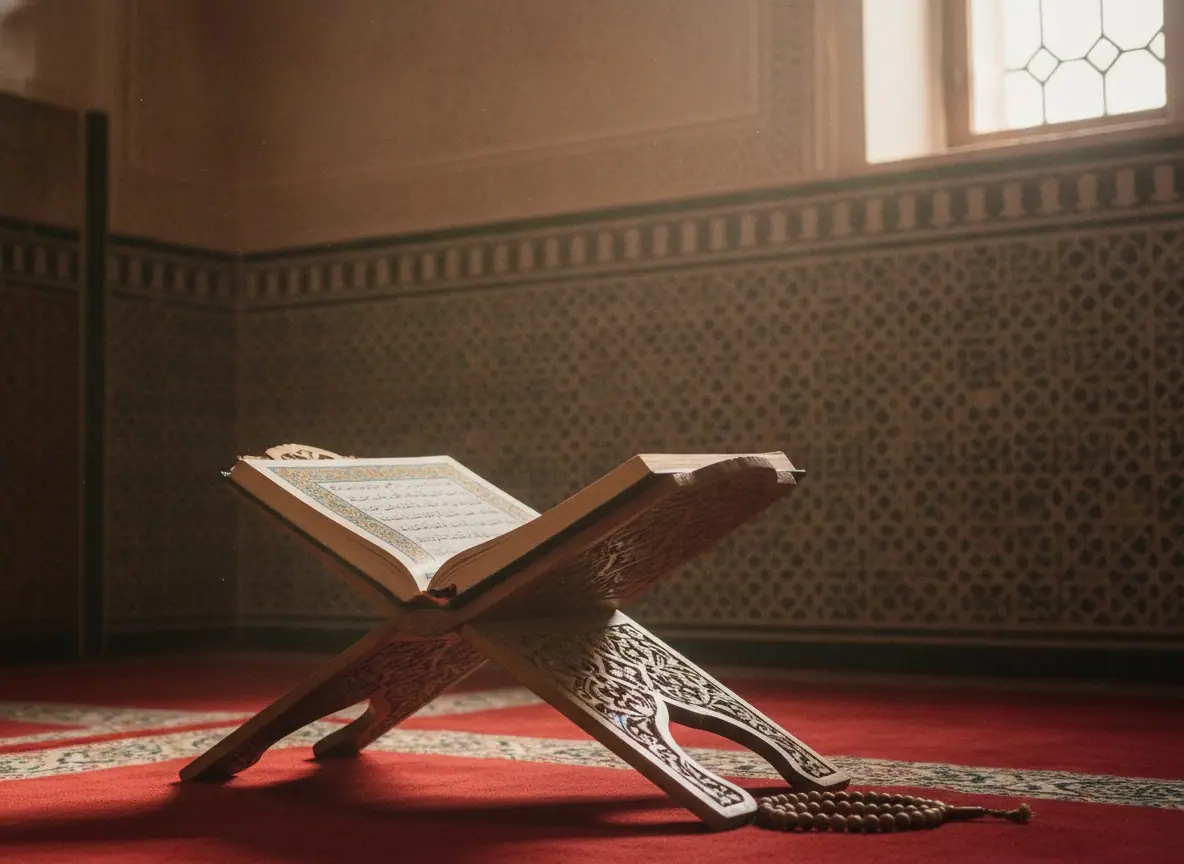
Its full title is Dalāʾil al-khayrāt wa-shawāriq al-anwār fī dhikr al-ṣalāt ʿalā al-Nabī al-mukhtār, roughly “Guides to good things and dawning lights, on the blessings upon the Chosen Prophet”. It is not a treatise but a book to be recited. After an opening supplication come the names of the Prophet ﷺ, around two hundred of them, and a short description of his resting place in Medina. The body of the book is a long sequence of ṣalawāt, prayers of blessing, divided into eight parts (aḥzāb) so that the whole book can be read in a week, beginning on Monday.
Its foundation is the Qur’anic command to send blessings on the Prophet (33:56) and the hadith in Sahih Muslim that whoever blesses him once, God blesses ten times. A story often told in Morocco says al-Jazuli was moved to write it after seeing a girl draw water from a well without a rope; when he asked how, she answered that it was through blessings on the Prophet. He is said to have compiled the book in Fes, drawing on the libraries of the Qarawiyyin.
A book read across the world
Within a century the Dalāʾil had travelled from Morocco to the Ottoman lands, and it went on to Mughal India, West Africa and Southeast Asia. It is among the most copied devotional books in Islamic history, and illuminated manuscripts of it, often with paintings of Mecca and Medina, are kept in libraries and museums around the world.
In Morocco it is read alone and in groups, in mosques, zawiyas and homes, often after the dawn prayer or on Fridays. Muhammad al-Mahdi al-Fasi of Fes (d. 1698) wrote its best-known commentary, Maṭāliʿ al-masarrāt, still used to explain its names and prayers. Many readers today start with an edition that prints the Arabic beside a transliteration and an English translation.
From Afughal to Marrakech
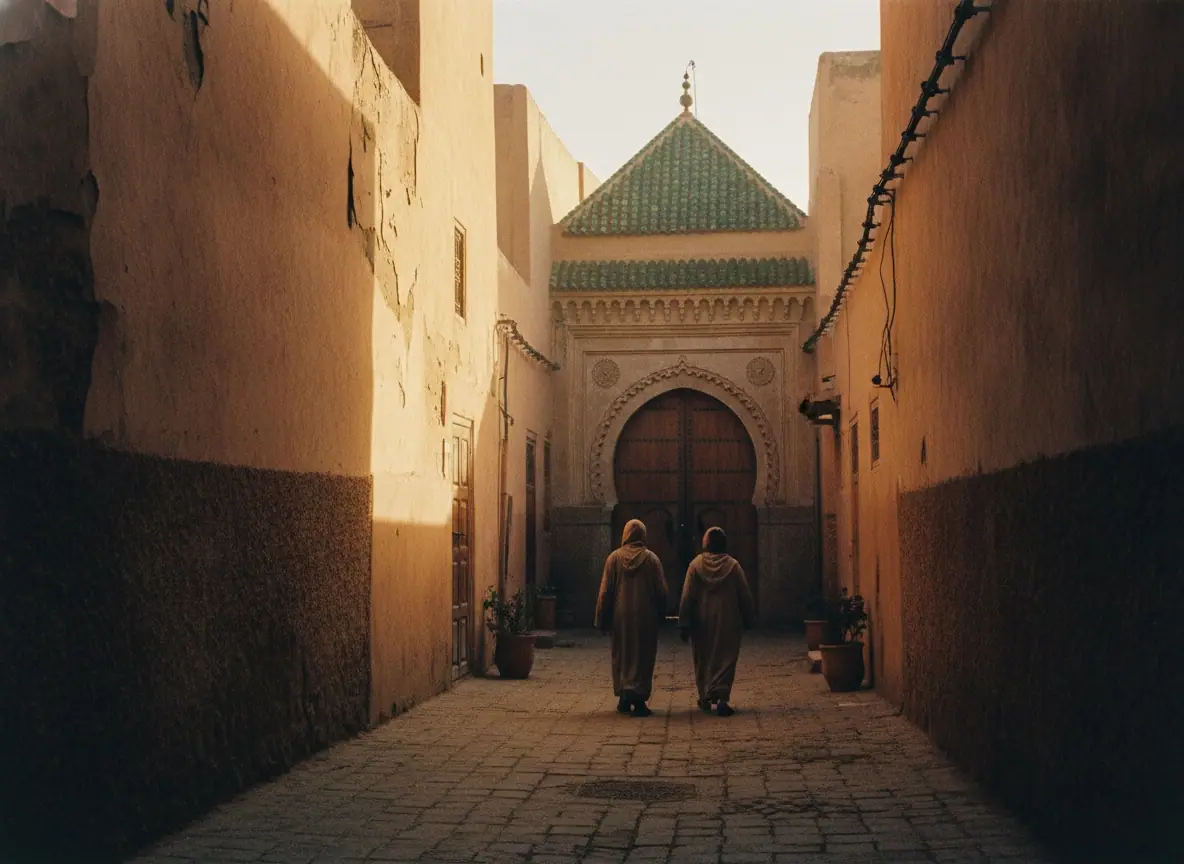
In the sixteenth century the Saadian sultans had al-Jazuli’s remains moved from Afughal to Marrakech, their new capital. His followers say the body was found intact. He was buried in the north of the medina, in the Riad al-ʿArus quarter, where a mosque and mausoleum with a green-tiled roof were built over the tomb; locals know it as Sidi Ben Slimane. The great ziyara of the Seven Saints of Marrakech, fixed in the late seventeenth century, makes it the fourth station, after Sidi Bel Abbes.
Visiting the tomb with respect
The zawiya is a place of prayer. A few simple customs go a long way:
- Dress modestly: shoulders and knees covered, and a headscarf for women.
- Keep your voice low, and ask before taking any photograph.
- Muslim visitors usually recite al-Fatiha and send blessings on the Prophet ﷺ, which is what the saint himself spent his life doing.
- The interior is generally reserved for Muslim visitors, according to the custodians’ rules; every visitor can see the entrance and the quarter around it with a guide.
- Fridays are busy. A weekday morning is calmer.
Where you meet al-Jazuli on our retreats
Our three Marrakech retreats, Heritage, Signature and Luxury, give a full day to the Seven Saints, with time at the tomb of Imam al-Jazuli and his two successors. One evening is kept for the Dalāʾil al-Khayrāt: a reading with a short explanation of its names and prayers, followed by ṣalawāt. Guests on the devotional track recite; guests on the open track are welcome to listen.
Dates are shared by the three tiers and confirmed once 10 guests have joined; see the current ones on our group dates page.
Questions
Who was Imam al-Jazuli?
A Moroccan scholar and saint from the Sus (d. 1465) who renewed the Shadhili path in Morocco and wrote the Dalāʾil al-Khayrāt, a book of blessings on the Prophet ﷺ.
What is the Dalāʾil al-Khayrāt?
A book of ṣalawāt, prayers of blessing on the Prophet ﷺ, with his names and a description of his resting place, divided into eight parts to be recited over a week.
How do you read the Dalāʾil al-Khayrāt?
Traditionally one part a day, starting on Monday, so that the whole book is read every week. Many readers begin with a bilingual edition and a teacher’s permission.
Where is the tomb of Imam al-Jazuli?
In the Riad al-ʿArus quarter in the north of the Marrakech medina, in the mausoleum known locally as Sidi Ben Slimane.
Is al-Jazuli one of the Seven Saints of Marrakech?
Yes, the fourth in the traditional order, after Sidi Bel Abbes. Two of his successors, Sidi Abdelaziz Tebbâa and Sidi Abdallah al-Ghazwani, are also among the seven.
Can non-Muslims visit al-Jazuli’s tomb?
Every visitor can see the entrance and the quarter with a guide. The interior is generally reserved for Muslims, according to the custodians’ rules.
Sources
- Vincent J. Cornell, Realm of the Saint: Power and Authority in Moroccan Sufism (University of Texas Press, 1998)
- Encyclopaedia of Islam, Second Edition: “al-Djazūlī” and “Shādhiliyya”
- The Qur’an, 33:56; Sahih Muslim, Book of Prayer (on blessings on the Prophet)